Weak Urine Stream? Why Uroflowmetry May Help
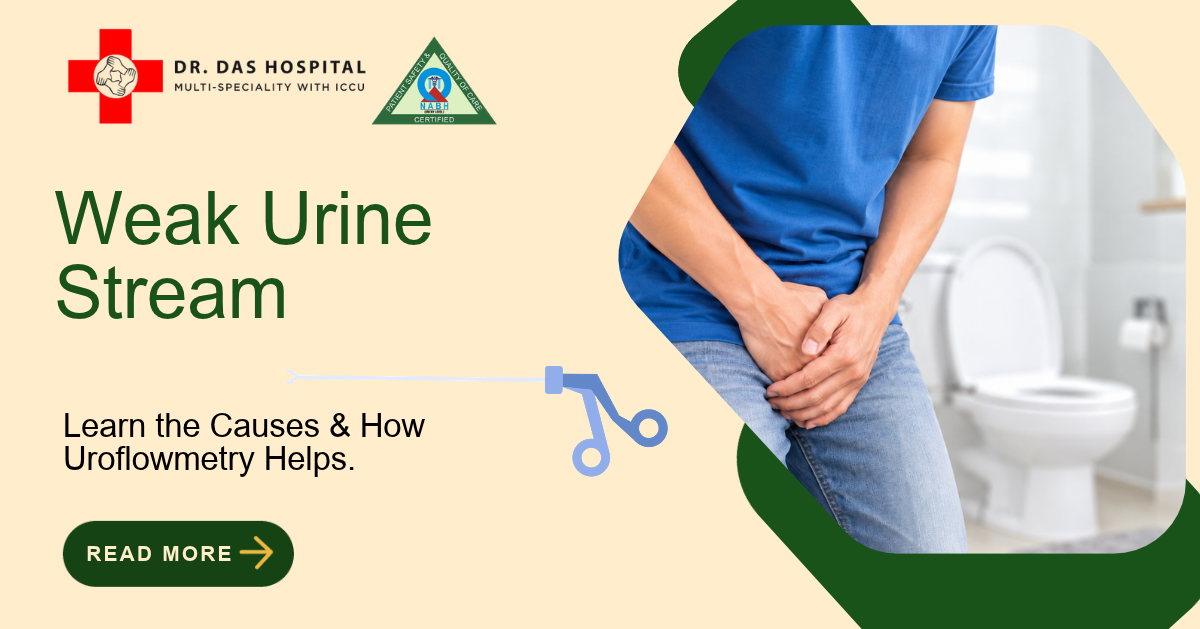
Weak Urine Stream or Incomplete Emptying? Why Your Doctor May Recommend Uroflowmetry
Have you ever stood in the bathroom waiting for your urine stream to start? Does urination take longer than usual, or do you feel the need to go again just 10 minutes after finishing?
Perhaps you're waking up several times at night, disturbing your sleep and leaving you tired the next morning.
These problems can be frustrating, especially when they become part of your daily routine.
Although urinary changes become more common with age, a weak stream or difficulty emptying your bladder should not be dismissed as normal aging.
The good news? Modern Urology offers simple, painless, non-invasive tests that help doctors understand how well your bladder is emptying.
One such test is uroflowmetry, which measures your urine flow and provides useful information about possible urinary problems.
What Does a Weak Urine Stream and Incomplete Emptying Actually Mean?
Your bladder stores urine until you're ready to pass it. During urination, the bladder muscle contracts while the outlet relaxes, allowing urine to flow out.
When this process doesn't work smoothly, you may experience lower urinary tract symptoms (LUTS).
Common signs include:
- Urinary hesitancy: Waiting several seconds before urine starts flowing.
- Slow urine flow: Noticing that your stream is weaker than before.
- Intermittent flow: Urine starts and stops several times.
- Straining to urinate: Needing to push or use extra effort.
- Terminal dribbling: Urine continues dripping as you finish.
- Nocturia: Waking up repeatedly at night to urinate.
- Incomplete emptying: Feeling that urine remains in your bladder even after using the toilet.
The feeling of incomplete bladder emptying does not always mean urine is actually being retained.
A proper evaluation helps determine whether urine remains in the bladder or whether another condition is causing the sensation.
Common Underlying Causes: Is It a Blockage or a Weak Bladder Muscle?
Understanding weak urine stream causes is easier when you imagine a garden hose.
If water flows slowly, there are two possibilities: something is narrowing the hose, or the water pressure is too low.
Your urinary system works similarly.
1. Physical Blockage (Obstruction)
A blockage makes it difficult for urine to pass through the urinary outlet.
Possible causes include:
- Benign prostatic hyperplasia (BPH): An enlarged prostate may compress the urethra in men.
- Urethral stricture: Scar tissue narrows the tube carrying urine outside the body.
- Bladder neck obstruction: The opening between the bladder and urethra does not open properly.
- Pelvic organ prolapse: In some women, weakened pelvic support can affect bladder emptying.
Enlarged prostate (BPH) symptoms often include hesitancy, a weaker stream, nighttime urination and dribbling.
Bladder Muscle Weakness
Sometimes the urinary passage is open, but the bladder cannot contract strongly enough to empty properly.
This is called detrusor underactivity, or reduced bladder muscle activity.
Possible contributing factors include aging-related changes, diabetes-related nerve damage, spinal conditions and other neurological disorders.
People with weak bladder muscles may experience prolonged urination, straining or difficulty emptying.
Blockage vs. Weak Bladder Muscles: What's the Difference?
| Signs of a Blockage | Signs of Weak Bladder Muscles | Why Guessing Without a Test Is Risky |
|---|---|---|
| Weak or interrupted stream | Slow, prolonged urination | Both can produce similar symptoms |
| Difficulty starting urine | Difficulty producing a strong contraction | Symptoms cannot confirm the cause |
| Straining or dribbling | Straining or incomplete emptying | Treatment differs depending on the problem |
| Possible retained urine | Possible retained urine | Persistent retention may affect bladder and kidney health |
Important: These symptoms overlap. Some patients may have both an obstruction and reduced bladder muscle activity.
Why Your Doctor Recommends Uroflowmetry First
If you report a weak stream, your doctor needs to understand what happens when you urinate.
A qualified Urologist in Mumbai may recommend uroflowmetry as part of the initial assessment rather than assuming the problem is an enlarged prostate or weak bladder muscle.
In Urology, uroflowmetry is a widely used first-line assessment because it is:
- Non-invasive: No needles or catheters are needed for the flow test.
- Painless: You simply urinate normally.
- Quick: The actual measurement usually takes only minutes.
- Informative: It records urine flow speed, volume and pattern.

This explains why doctors recommend uroflowmetry when patients experience persistent urinary difficulties.
However, uroflowmetry alone cannot reliably distinguish a blockage from weak bladder muscles. Your doctor interprets it alongside symptoms, examination and other tests.
Already Have a Doctor's Prescription?
Learn more about getting a quick, comfortable Uroflowmetry Test in Chembur at Dr Das Multispeciality Hospital.
How the Test Pinpoints Your Problem (And What It Feels Like)
Many patients feel nervous before a urinary test. Fortunately, the procedure itself is straightforward.
Step 1: Arrive With a Comfortably Full Bladder
You'll usually be asked to drink water beforehand and avoid urinating until the test.
Your bladder should feel comfortably full, not painfully stretched.
Step 2: Urinate Normally Into the Equipment
You'll urinate privately into a specialised funnel or toilet connected to a flow-measuring device.
There is no catheter insertion for standard uroflowmetry.
Step 3: Your Urine Flow Is Recorded
The equipment measures how quickly urine passes and produces a graph.
Your doctor evaluates three important findings:
Qmax (Maximum Flow Rate)
Qmax urine flow rate means the highest speed your urine reaches, measured in millilitres per second (mL/s).
A low reading may suggest reduced flow, but its meaning depends on your age, urine volume and other findings.
Flow Pattern (Curve Shape)
A typical flow graph often looks like a smooth bell.
A flattened, interrupted or irregular curve may suggest an abnormal emptying pattern, but cannot identify the exact cause by itself.
PVR (Post-Void Residual)
After urination, your doctor may use a painless lower-abdomen ultrasound to measure how much urine remains in your bladder.
This is particularly helpful when you report incomplete emptying.
Remember: A low-volume urine sample may produce a misleading result. Your doctor may repeat the test if necessary.
Red Flag Symptoms: When Should You Consult a Specialist Immediately?
Not every urinary problem is an emergency. However, certain symptoms require prompt medical attention.
Watch for these warning signs:
- Complete inability to urinate: Especially with lower abdominal pain or swelling. Visit an emergency department immediately.
- Blood in the urine (hematuria): Even without pain, visible blood requires prompt evaluation.
- Burning urination with fever: Particularly when accompanied by chills or weakness, this may indicate a significant urinary infection.
- Severe lower back or flank pain: Especially with fever, vomiting or urinary difficulties.
Persistent symptoms without these warning signs also deserve assessment.
A qualified Urologist in Mumbai can evaluate your symptoms and recommend appropriate investigations. Early Urology assessment may help identify problems before complications develop.
Frequently Asked Questions (FAQs)
Conclusion: Don't Ignore Changes in Your Urine Flow
A weak urine stream or the sensation that your bladder hasn't emptied can affect your sleep, confidence and daily comfort.
The earlier you understand the cause, the sooner you can receive appropriate treatment. Timely evaluation may also help prevent complications from significant urinary retention, including bladder or kidney damage.
At the advanced Urology department of Dr Das Multispeciality Hospital, patients can seek evaluation for urinary symptoms and receive guidance on appropriate diagnostic testing.
If you're experiencing persistent urinary difficulties, consult a trusted Urologist in Mumbai and explore the Uroflowmetry Test in Chembur to take the next step towards accurate diagnosis and personalised care.
You don't have to accept uncomfortable urination as a normal part of growing older.