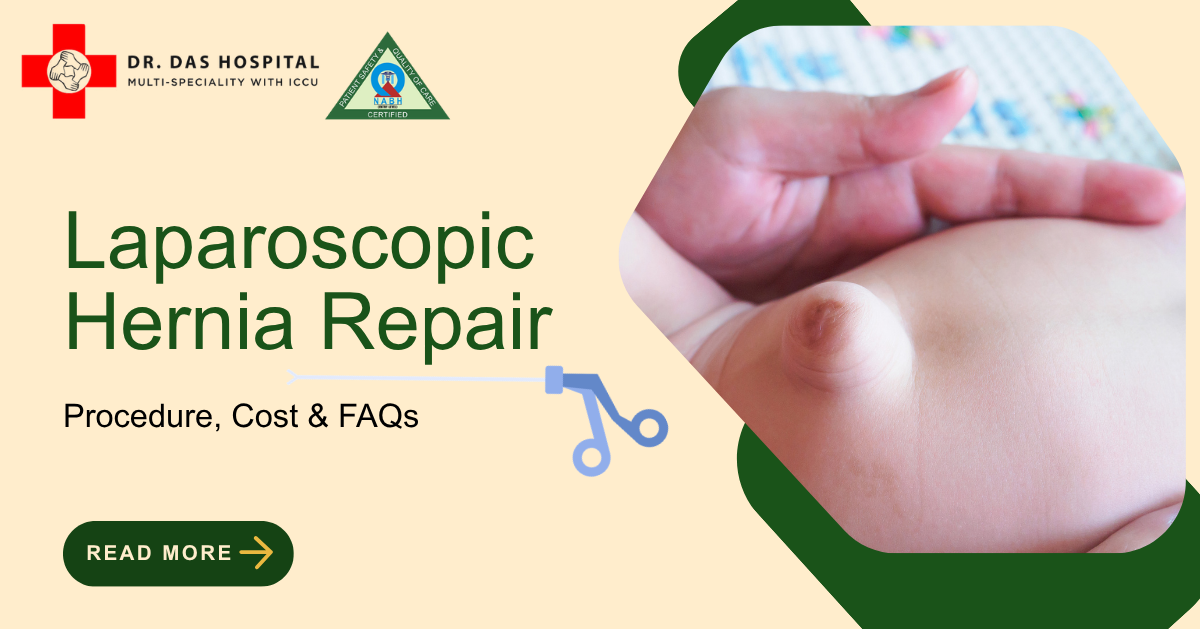
Laparoscopic Hernia Repair

Laparoscopic Hernia Repair

Hernias are a common condition where organs or tissues protrude through weak areas in the abdominal wall. Laparoscopic hernia repair is a minimally invasive surgical technique that treats hernias with small incisions, reduced pain, and faster recovery.

At Dashospital’s General Surgery Department , ,patients are treated by Dr. Debashish M. Das, M.S., M.Ch., F.M.A.S., GI Endoscopist & Laparoscopic General Surgeon, with advanced laparoscopic techniques ensuring optimal outcomes.
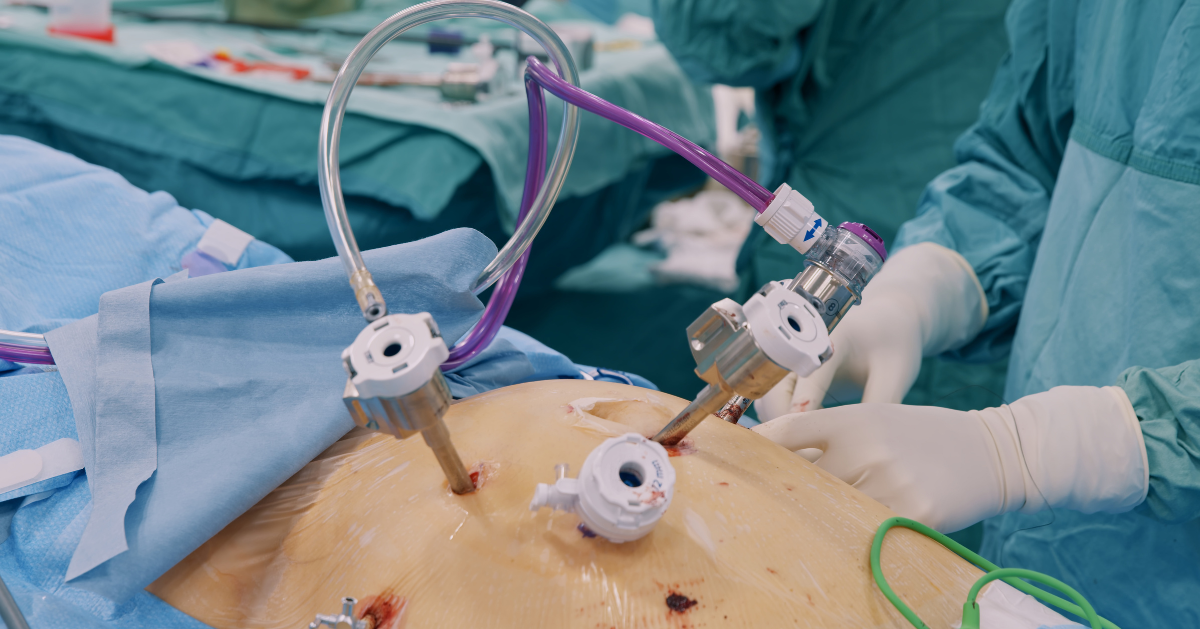
Dashospital Laparoscopic Surgery

What is Laparoscopic Hernia Repair?

Laparoscopic hernia repair uses tiny incisions and a laparoscope (camera) to guide the surgeon during the operation.

Compared to traditional open surgery:

  • Incisions are smaller, leaving minimal scars
  • Post-operative pain is reduced
  • Recovery and return to daily activities are faster

This procedure is commonly used for:

  • Inguinal hernia (groin)
  • Umbilical hernia (belly button)
  • Incisional hernia (previous surgical site)

Learn more about laparoscopic surgery .

This approach minimizes tissue damage, reduces post-operative pain, and allows faster recovery compared to traditional open surgery.

Procedure: Step by Step

Anesthesia: Patients are administered general anesthesia.
Incisions: Small incisions are made near the hernia site.
Insertion of Laparoscope: A thin camera is inserted to guide the surgery.
Hernia Reduction: The protruding tissue or organ is gently pushed back.
Mesh Placement: A synthetic mesh is placed to strengthen the abdominal wall.
Closure: Incisions are closed with sutures or surgical glue.

Procedure: Step by Step

Anesthesia: Patients are administered general anesthesia.
Incisions: Small incisions are made near the hernia site.
Insertion of Laparoscope: A thin camera is inserted to guide the surgery.
Hernia Reduction: The protruding tissue or organ is gently pushed back.
Mesh Placement: A synthetic mesh is placed to strengthen the abdominal wall.
Closure: Incisions are closed with sutures or surgical glue.

Benefits of Laparoscopic Hernia Repair

Minimal Scarring: Tiny incisions improve cosmetic outcomes.
Less Pain: Patients experience reduced post-operative discomfort.
Faster Recovery: Return to normal activities within 1–2 weeks.
Lower Risk of Infection: Smaller incisions reduce complications.
Suitable for Bilateral Hernias: Both sides can be repaired simultaneously.

Cost of Laparoscopic Hernia Surgery

The cost depends on factors such as:

  • Type and size of hernia
  • Hospital stay duration
  • Anesthesia type
  • Surgeon experience

At Dashospital, laparoscopic hernia surgery is competitively priced with transparent billing, ensuring no hidden costs. For a personalized estimate, consult Dr. Debashish M. Das.

Recovery After Surgery

Hospital Stay: Usually 1–2 days
Pain Management: Oral medications for mild discomfort
Activity: Light walking immediately; avoid heavy lifting for 4–6 weeks
Follow-up: Regular check-ups to monitor healing and prevent recurrence

Frequently Asked Questions (FAQs)

Most procedures take 30–90 minutes depending on hernia type.
Patients experience minimal pain, managed with oral medications.
Light activities can resume in 1–2 weeks, while heavy lifting should be avoided for 4–6 weeks.
Potential risks include bleeding, infection, organ injury, or recurrence, but they are rare with experienced surgeons.
Yes. Laparoscopic repair results in smaller scars, less pain, and faster recovery.

Book a Consultation

Schedule your laparoscopic surgery consultation with Dr. Debashish M. Das for personalized care and guidance.

Book Appointment
Call WhatsApp