7 Critical Bariatric Surgery Mistakes to Avoid
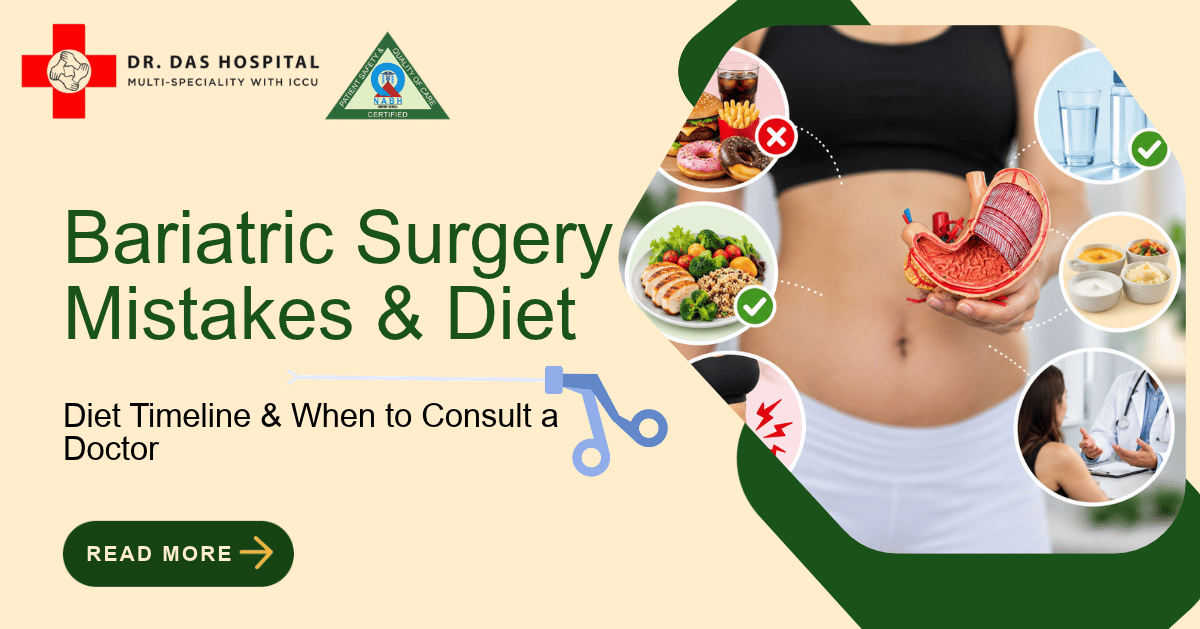
7 Critical Bariatric Surgery Mistakes to Avoid: Diet Timeline & When to Consult a Doctor
Bariatric surgery helps people with obesity lose weight and improve their health. But what happens after surgery can affect your recovery and long-term results.
Eating too quickly, drinking with meals, or ignoring unusual symptoms can cause problems. Some mistakes lead to discomfort, while others may result in nutritional deficiencies or serious complications.
Understanding the right bariatric surgery diet, common eating mistakes, and warning signs can help you recover safely.
If you are looking for a General surgeon in Mumbai, Dr Das Multispeciality Hospital in Chembur offers general and laparoscopic surgical consultations
1. Not Following the Bariatric Surgery Diet Timeline
Your stomach needs time to heal after surgery. Returning to solid foods too early can cause pain, vomiting, or food intolerance.
The diet progresses through four stages.
| Recovery Stage | Food Choices | What to Avoid |
|---|---|---|
| Stage 1: Liquids, usually first 1–2 weeks | Water, prescribed protein drinks, strained soups | Solid foods, sugary drinks |
| Stage 2: Pureed foods, often weeks 2–4 | Smooth dal puree, blended paneer, plain curd | Food lumps, raw vegetables |
| Stage 3: Soft foods, often weeks 3–6 | Soft scrambled eggs, mashed fish, soft tofu | Tough meat, hard or fibrous foods |
| Stage 4: Regular textures, often after 4–6 weeks | Small portions of tolerated, protein-rich meals | Large portions, poorly chewed food |
These timelines are approximate. Your surgeon may recommend a different progression based on your procedure and recovery.
Never advance your diet simply because you feel hungry.
Ignoring the 30/30 Rule and Drinking With Meals
One common bariatric surgery mistake is drinking water while eating.
After surgery, eating and drinking together may cause uncomfortable fullness, regurgitation, or nausea. Separating fluids from meals can also help patients manage food tolerance.
What Is the 30/30 Rule?
Many bariatric programmes recommend:
- Stop drinking 30 minutes before eating.
- Avoid liquids during your meal.
- Wait 30 minutes after eating before drinking again.
Some programmes use a shorter gap before meals. Follow your surgeon's instructions.
For example, if you eat lunch at 1 PM, organise your fluid intake around your prescribed meal schedule.
Drink small amounts regularly between meals to prevent dehydration.
Avoid Carbonated Drinks and Excess Air
Soda, sparkling water, and fizzy drinks can cause bloating and abdominal discomfort.
Some bariatric programmes also recommend avoiding straws and chewing gum, especially during early recovery, because they may increase swallowed air.
These habits do not automatically stretch your stomach, but they can worsen discomfort.
Eating Sugary Foods That Trigger Dumping Syndrome
Imagine drinking a glass of sweet fruit juice after gastric bypass surgery.
Within 20 minutes, you experience abdominal cramps, sweating, a racing heartbeat, and sudden diarrhoea.
These symptoms may indicate dumping syndrome, a condition in which stomach contents move too rapidly into the small intestine.
It is more common after gastric bypass but can also occur after other stomach surgeries.
Early Dumping Syndrome
Usually develops within 30 minutes after eating.
Symptoms include:
- Abdominal cramping and diarrhoea
- Nausea and bloating
- Sweating and flushing
- Rapid heartbeat or dizziness
Late Dumping Syndrome
It usually develops 1–3 hours after eating.
A rapid rise in blood sugar may trigger excessive insulin release, causing low blood glucose.
Symptoms include shakiness, sweating, weakness, dizziness, and difficulty concentrating.
How Can You Reduce the Risk?
Limit concentrated sugar, including sweetened beverages, desserts, and fruit juices.
Avoid frequent high-sugar snacks. Choose balanced meals with protein and other foods recommended by your dietitian.
If symptoms repeatedly occur after meals, consult your bariatric specialist rather than treating them yourself.
4. Neglecting Protein, Vitamins, and Indian Meal Planning
After bariatric surgery, your body still needs protein for healing and muscle maintenance.
Many patients require approximately 60–100 grams of protein daily. Individual needs vary according to surgery type, nutritional status, and body composition.
Eat Protein First
Consider a typical Indian meal of dal, rice, vegetables, and curd.
If you finish the rice first, you may feel full before consuming enough protein.
Instead, prioritise your prescribed protein portion.
Suitable options include:
- Soft paneer or tofu
- Eggs
- Thick, well-cooked dal
- Greek yogurt or strained curd
- Soft fish or shredded chicken
Watery dal may provide fewer grams of protein per small serving than thick dal. During early recovery, this difference matters because portions are limited.
Ask your dietitian to calculate your actual protein intake rather than relying on assumptions.
Do Not Skip Nutritional Supplements
Bariatric surgery can affect vitamin and mineral absorption.
Your doctor may prescribe lifelong supplements containing vitamin B12, iron, calcium, vitamin D, and other nutrients.
Calcium citrate is often preferred after gastric bypass because its absorption is less dependent on stomach acid.
Vitamin B12 may be prescribed orally, sublingually, or by injection. Iron formulations depend on your blood results and tolerance.
Take calcium and iron separately when instructed because calcium may reduce iron absorption.
Never choose supplement doses without professional guidance.
5. Grazing, Liquid Calories, and Poor Lifestyle Habits
Small stomach capacity does not prevent every form of excess calorie intake.
You may eat very little at meals but consume significant calories throughout the day.
Consider these habits:
- Drinking sweetened chai several times daily
- Frequently sipping sugary coffee
- Eating biscuits or namkeen between meals
- Snacking continuously instead of following planned meals
This pattern, known as grazing, can contribute to weight regain.
Choose planned, protein-focused meals and appropriate snacks.
Walking and gradually increasing physical activity can also support recovery.
Regular sleep, emotional eating support, and medical follow-ups remain important.
6. Ignoring Warning Signs: When Should You Consult a Doctor?
Some discomfort is expected after bariatric surgery, especially during early recovery.
But persistent or worsening symptoms should never be dismissed as normal healing.
When to Contact Your Surgeon
Arrange prompt medical advice for:
- Repeated vomiting
- Difficulty swallowing or eating
- Persistent constipation or diarrhoea
- Poor fluid intake
- Unusual fatigue or weakness
- Frequent symptoms after meals

Continued vomiting can cause dehydration and thiamine deficiency, which may lead to neurological complications.
When to Seek Emergency Care
Seek immediate emergency assessment if you develop:
- Severe or worsening abdominal pain
- Fever with increasing abdominal discomfort
- Persistent resting heart rate above 120 beats per minute
- New left shoulder pain with fever or abdominal symptoms
- Breathing difficulty or chest pain
- Fainting, confusion, or vomiting blood
These symptoms may indicate bleeding, infection, blood clots, or a surgical leak.
A surgical leak occurs when digestive contents escape through a defect in the stomach staple line or surgical connection. It requires urgent assessment.
Do not wait for every symptom to appear before seeking help.
7. Skipping Follow-Ups With Your Surgical Team
Losing weight does not mean you can stop medical appointments.
Follow-ups help identify nutritional deficiencies, medication changes, digestive problems, and weight regain.
Patients considering General & Laparoscopic Surgery should also understand the recovery plan, possible complications, and need for ongoing monitoring..
For bariatric-specific postoperative concerns, consult your operating bariatric surgeon or a qualified bariatric team.
Frequently Asked Questions
Conclusion
Avoiding bariatric surgery mistakes begins with understanding your diet, eating habits, and recovery symptoms. Follow the prescribed food progression, separate fluids from meals, prioritise protein, and take your supplements regularly. Recognise symptoms of dumping syndrome and seek medical attention when warning signs appear. If you need guidance about surgical care or recovery, consult an experienced medical professional. With consistent habits and appropriate follow-up care, you can protect your health and maintain your weight loss progress.